

What is the texture of a wool packing pad?
Jan 14, 2026
As a supplier of Wool Packing Pads, I've had the privilege of delving deep into the world of packaging materials. One of the most frequently asked questions I encounter is about the texture of a wool packing pad. In this blog post, I'll take you on a journey to understand the unique texture of wool packing pads and why it matters in the world of packaging.
The Natural Fibrous Structure
Wool is a natural fiber sourced from sheep and other animals like goats (cashmere and mohair) and alpacas. The texture of a wool packing pad is fundamentally shaped by the individual wool fibers that make it up. These fibers have a scaly outer layer, which gives them a unique characteristic. When the fibers are processed to create a packing pad, these scales interact with each other, creating friction. This friction is what allows the wool fibers to interlock and form a cohesive structure.
The natural crimp of wool fibers also contributes to the texture. Wool fibers are not straight; they have a wavy or curly shape. This crimp adds bulk and resilience to the packing pad. When you touch a wool packing pad, you can feel its softness combined with a certain springiness. The crimped fibers can compress under pressure and then bounce back to their original shape, making the pad an excellent shock - absorber.
Softness and Comfort
One of the most noticeable aspects of the texture of a wool packing pad is its softness. The fine diameter of wool fibers, especially in high - quality wools, gives the pad a gentle touch. This soft texture is not only pleasant to handle but also crucial for protecting delicate items during packaging. For example, when packing fragile glassware or electronic components, the soft wool fibers can cushion the items without scratching or damaging them.
The softness of wool also makes it a great option for packing items that are sensitive to abrasion. Unlike some Chemical Fiber Packing Pad, which may have a rougher texture, wool packing pads can provide a gentle and protective environment for the products.
Durability and Resilience
Despite its softness, a wool packing pad is surprisingly durable. The interlocking of the scaly and crimped fibers creates a strong and stable structure. This allows the pad to withstand repeated handling and compression without losing its shape or integrity.
Wool has a high natural elasticity, which means it can stretch and then return to its original size. This property is beneficial in packaging applications where the pad may be subjected to various forces during shipping and storage. For instance, if a box containing a wool - packed item is jostled during transit, the wool packing pad can absorb the impact and protect the contents.
Breathability
Another important characteristic related to the texture of a wool packing pad is its breathability. The natural structure of wool fibers allows air to circulate through the pad. This is in contrast to some synthetic materials that may trap moisture and heat.
The breathable texture of wool is especially important when packing items that are sensitive to humidity. Moisture can cause damage to many products, such as wood furniture, leather goods, and certain types of food. The breathable nature of wool helps to prevent the build - up of moisture, keeping the packed items dry and in good condition.
Absorbency
Wool has a remarkable ability to absorb moisture. It can absorb up to 30% of its own weight in water without feeling wet to the touch. This absorbency is due to the hygroscopic nature of wool fibers, which have microscopic pores that can hold water molecules.
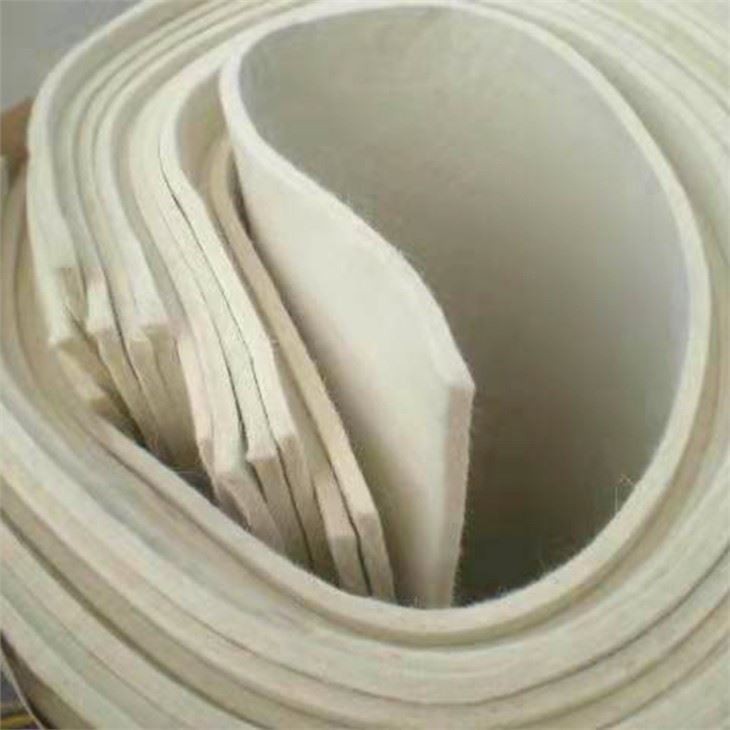

In a packing pad, this absorbency can be a great advantage. For example, if there is a small amount of condensation inside a shipping container, the wool packing pad can absorb the moisture, protecting the packed items from water damage. The absorbed moisture can then gradually evaporate as the environment dries out.
Comparison with Other Packaging Materials
Let's compare the texture of wool packing pads with that of Chemical Fiber Packing Pad and Bamboo Fiber Packaging Mat.
Chemical fiber packing pads often have a smoother and more uniform texture. While they can be effective in providing cushioning, they may lack the natural softness, breathability, and absorbency of wool. Synthetic fibers are also less environmentally friendly compared to wool, which is a renewable and biodegradable material.
Bamboo fiber packaging mats have a texture that is somewhat different. They are generally more rigid and may not have the same level of softness and resilience as wool packing pads. Bamboo fibers are also less absorbent than wool, which can be a drawback in certain packaging situations.
Applications Based on Texture
The unique texture of wool packing pads makes them suitable for a wide range of applications. In the electronics industry, the soft and shock - absorbing texture can protect delicate circuit boards and components from damage during shipping. In the art world, wool packing pads can be used to wrap paintings, sculptures, and other artworks, providing a gentle and protective layer.
In the food industry, the breathability and absorbency of wool can be utilized to pack perishable items. For example, when shipping fresh produce, the wool packing pad can help maintain the right level of humidity and protect the fruits and vegetables from bruising.
Conclusion
In conclusion, the texture of a wool packing pad is a complex combination of softness, resilience, breathability, and absorbency. These characteristics are a result of the natural structure of wool fibers and make wool packing pads an excellent choice for many packaging applications.
If you're in the market for high - quality packaging materials and are interested in the unique benefits of wool packing pads, I invite you to explore our Wool Packing Pad offerings. We're always ready to engage in discussions about your specific packaging needs and how our products can meet them. Whether you're a small business or a large corporation, we believe our wool packing pads can provide the protection and quality you're looking for. Contact us to start a procurement discussion and find out how we can be your reliable partner in packaging solutions.
References
- Textile Institute. "Wool: Science and Technology." Woodhead Publishing, 2016.
- Morton, W. E., & Hearle, J. W. S. "Physical Properties of Textile Fibres." Elsevier, 2008.