

What is the thermal conductivity of industrial felt?
Jul 01, 2025
As a seasoned supplier of industrial felt, I've had countless inquiries about the thermal conductivity of this versatile material. In this blog post, I'll delve into the concept of thermal conductivity, explore how it applies to industrial felt, and discuss the factors that influence it.
Understanding Thermal Conductivity
Thermal conductivity is a measure of a material's ability to conduct heat. It is defined as the quantity of heat that passes through a unit area of a material in a unit time, under a unit temperature gradient. In simpler terms, it tells us how easily heat can move through a substance. Materials with high thermal conductivity, like metals, transfer heat quickly, while those with low thermal conductivity, such as insulators, impede heat flow.
The SI unit for thermal conductivity is watts per meter - kelvin (W/(m·K)). This value helps engineers and scientists select the appropriate materials for applications where heat transfer is a critical consideration, whether it's in building insulation, electronic cooling, or industrial manufacturing.
Thermal Conductivity of Industrial Felt
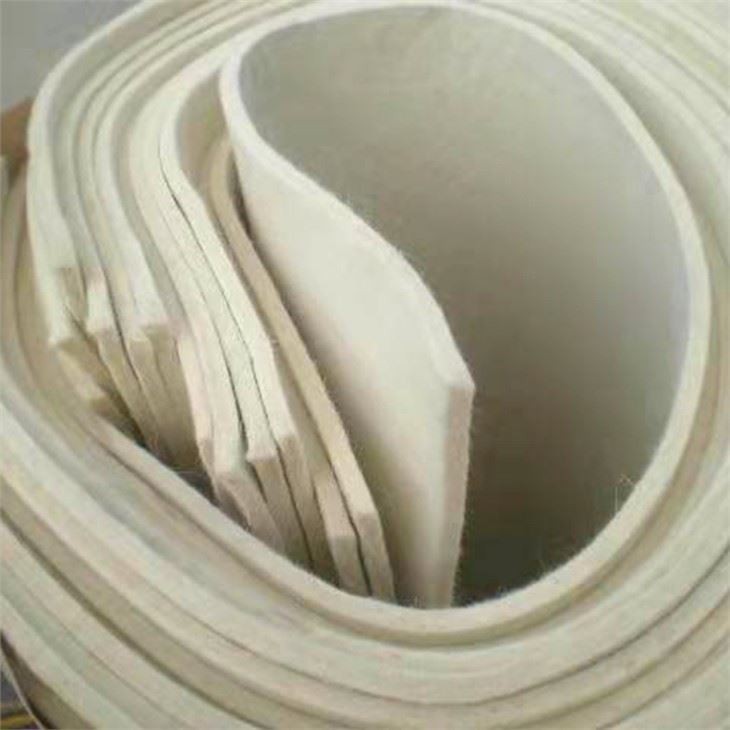
Industrial felt is a non - woven fabric made from natural or synthetic fibers. It has a wide range of applications, from gaskets and seals to filtration and insulation. When it comes to thermal conductivity, industrial felt generally exhibits low values, making it a good insulator.
The low thermal conductivity of industrial felt can be attributed to its structure. The fibers in felt are randomly oriented and intertwined, creating a large number of small air pockets. Air is a poor conductor of heat, and these air pockets act as barriers to heat transfer. As a result, heat has a difficult time passing through the felt, and it can effectively reduce the rate of heat flow.
The specific thermal conductivity of industrial felt can vary depending on several factors, including the type of fibers used, the density of the felt, and its thickness.
Factors Influencing the Thermal Conductivity of Industrial Felt
Fiber Type
The type of fibers used in industrial felt has a significant impact on its thermal conductivity. Natural fibers like wool have relatively low thermal conductivity due to their unique structure. Wool fibers have a scaly surface and a hollow core, which trap air and reduce heat transfer. Additionally, wool has a high moisture - absorption capacity, and the latent heat associated with moisture evaporation can further enhance its insulating properties.
Synthetic fibers, such as polyester and nylon, also have low thermal conductivity. However, their performance may vary depending on the specific polymer structure and manufacturing process. Some synthetic fibers are engineered to have enhanced insulating properties, making them suitable for applications where high - performance insulation is required.
Density
The density of industrial felt refers to the mass of the felt per unit volume. Generally, higher - density felt has lower thermal conductivity. As the density increases, the number of fibers per unit volume also increases, which reduces the size of the air pockets. Smaller air pockets are more effective at preventing heat transfer because they limit the movement of air molecules. However, there is a limit to how much the density can be increased. If the felt becomes too dense, the fibers may start to pack too closely together, reducing the overall insulation performance.
Thickness
Thickness is another important factor in determining the thermal conductivity of industrial felt. Thicker felt provides more insulation because it offers a greater distance for heat to travel through. The relationship between thickness and thermal conductivity is not linear; doubling the thickness of the felt does not necessarily halve the heat transfer rate. However, increasing the thickness can significantly improve the insulating properties of the felt, especially in applications where high - level insulation is needed.

Applications of Industrial Felt Based on Thermal Conductivity
Insulation in Buildings
Industrial felt can be used as an insulating material in buildings. It can be installed in walls, attics, and floors to reduce heat loss in the winter and heat gain in the summer. Its low thermal conductivity helps to maintain a comfortable indoor temperature and reduce energy consumption. For example, Wool Hot Melt Pad can be used in building insulation applications, providing a natural and effective insulation solution.
Thermal Management in Electronics
In the electronics industry, industrial felt is used for thermal management. Electronic devices generate heat during operation, and excessive heat can reduce their performance and lifespan. Industrial felt can be used as a thermal insulator to prevent heat from spreading to other components or as a heat sink to absorb and dissipate heat. Acupuncture Cotton Pads may also find applications in electronics due to their insulating properties.
Industrial Equipment
Industrial felt is also used in industrial equipment to insulate pipes, tanks, and machinery. It helps to prevent heat loss from hot equipment and protect workers from high - temperature surfaces. Machine Parts Chemical Felt can be used in industrial equipment insulation, ensuring the efficient operation of the machinery.
Measuring the Thermal Conductivity of Industrial Felt
There are several methods for measuring the thermal conductivity of industrial felt. One common method is the guarded hot plate method. In this method, a sample of the felt is placed between two plates, one of which is heated and the other is cooled. The heat flow through the sample is measured, and the thermal conductivity is calculated based on the temperature difference across the sample and its thickness.
Another method is the heat flow meter method. This method uses a heat flow sensor to measure the heat flow through the sample. The thermal conductivity is then determined by dividing the heat flow rate by the temperature gradient across the sample.
Conclusion
The thermal conductivity of industrial felt is an important property that makes it a valuable material in a wide range of applications. Its low thermal conductivity, which is influenced by factors such as fiber type, density, and thickness, allows it to be used as an effective insulator in buildings, electronics, and industrial equipment.
If you're in the market for industrial felt and need a material with specific thermal conductivity requirements, I'd be more than happy to assist you. We have a wide range of industrial felt products to meet your needs. Whether you need insulation for a building project or thermal management for an electronic device, we can provide you with the right solution. Feel free to reach out to us to discuss your requirements and start a procurement negotiation.
References
- Incropera, F. P., & DeWitt, D. P. (2002). Fundamentals of Heat and Mass Transfer. John Wiley & Sons.
- Holman, J. P. (2010). Heat Transfer. McGraw - Hill.