

What is the production process of Insulated Mixed Felt?
Aug 21, 2025
As a supplier of Insulated Mixed Felt, I am excited to share with you the detailed production process of this remarkable product. Insulated Mixed Felt is a versatile material used in various industrial applications, valued for its excellent insulation properties, durability, and cost - effectiveness. In this blog, we will take a deep dive into how this product is made, from the raw materials to the final finished item.
Raw Materials Selection
The first step in the production of Insulated Mixed Felt is the careful selection of raw materials. Insulated Mixed Felt typically combines different fibers to achieve the desired insulation and performance characteristics. Common fibers used include wool, synthetic fibers, and sometimes natural fibers like cotton.
Wool is a popular choice due to its natural insulating properties. It has a unique crimp structure that traps air, providing excellent thermal insulation. Pure Wool Industrial Felt is often used as a reference for high - quality wool - based insulation products. Synthetic fibers, on the other hand, offer advantages such as high strength, resistance to moisture, and chemical stability. They can be engineered to have specific properties, which can enhance the overall performance of the Insulated Mixed Felt.
We source our raw materials from reliable suppliers who adhere to strict quality standards. Before using any raw material, it undergoes a series of tests to ensure its quality, purity, and suitability for the production process. This includes tests for fiber length, fineness, strength, and moisture content. Only the highest - quality raw materials are selected to guarantee the superior performance of our Insulated Mixed Felt.
Blending of Fibers
Once the raw materials are selected, the next step is to blend the different fibers. Blending is a crucial process as it determines the final properties of the Insulated Mixed Felt. The fibers are carefully measured and mixed in specific ratios according to the desired characteristics of the end product.
For example, if we want to produce a felt with high thermal insulation and good strength, we might blend a higher proportion of wool with a smaller amount of synthetic fibers. The blending process is carried out using specialized equipment, such as a blending machine. This machine evenly distributes the different fibers, ensuring a homogeneous mixture.
During blending, additives may also be introduced. These additives can enhance the performance of the felt in various ways. For instance, fire - retardant additives can be added to make the felt more resistant to fire, which is particularly important in applications where fire safety is a concern. Anti - static additives can be used to prevent the build - up of static electricity, which can be a problem in some industrial environments.
Carding
After the fibers are blended, they go through the carding process. Carding is a mechanical process that aligns the fibers in a parallel direction and removes any impurities or short fibers. The blended fibers are fed into a carding machine, which consists of a series of rollers covered with fine wires.
As the fibers pass through the carding machine, the wires separate and align them, creating a thin web of fibers. This web is then collected into a continuous sheet, which is called a carded web. The carding process not only aligns the fibers but also helps to further blend them, ensuring a more uniform structure in the felt.
The quality of the carded web is crucial for the final quality of the Insulated Mixed Felt. A well - carded web will result in a felt with better insulation properties, higher strength, and a more consistent appearance.
Needling
Once the carded web is formed, it is ready for the needling process. Needling is a process that interlocks the fibers in the web to form a cohesive felt structure. The carded web is passed through a needling machine, which has a series of barbed needles.
As the needles penetrate the web, they catch the fibers and pull them through, creating a three - dimensional interlocking structure. This interlocking gives the felt its strength and durability. The number of needle punches per square inch can be adjusted to control the density and strength of the felt. A higher number of needle punches will result in a denser and stronger felt, while a lower number will produce a lighter and more flexible felt.
The needling process can be carried out in multiple passes, depending on the desired thickness and density of the Insulated Mixed Felt. Each pass further enhances the interlocking of the fibers, improving the overall performance of the felt.
Heat Treatment
After needling, the felt may undergo heat treatment. Heat treatment is a process that can further improve the properties of the Insulated Mixed Felt. It can increase the dimensional stability of the felt, reduce its shrinkage, and enhance its insulation performance.
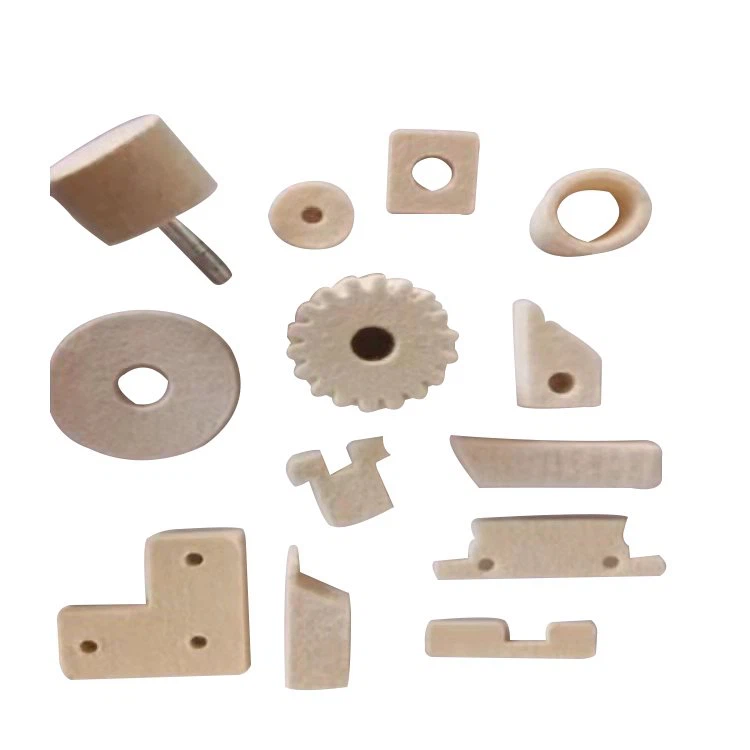

The felt is placed in a heat treatment oven at a specific temperature for a set period of time. The temperature and time are carefully controlled to achieve the desired results. During heat treatment, the fibers in the felt may undergo physical and chemical changes, such as the setting of the fiber structure and the removal of any residual moisture.
Heat treatment can also be used to activate certain additives that were introduced during the blending process. For example, some fire - retardant additives may require heat treatment to become fully effective.
Finishing
The final step in the production process of Insulated Mixed Felt is finishing. Finishing involves a series of processes that enhance the appearance and performance of the felt. This may include trimming the edges of the felt to ensure a uniform size and shape, surface treatment to improve its smoothness or water - repellency, and printing or labeling to provide product information.
Surface treatment can be done using various methods, such as coating or laminating. Coating the felt with a thin layer of polymer can improve its resistance to moisture, chemicals, and abrasion. Laminating the felt with a film or another material can add additional functionality, such as increased strength or improved insulation.
Printing or labeling on the felt can include information such as the product name, size, thickness, and any special properties or certifications. This helps the customers to easily identify and select the right product for their needs.
Quality Control
Throughout the entire production process, strict quality control measures are in place. At each stage, samples are taken and tested to ensure that the product meets the required standards. Quality control tests include tests for insulation performance, strength, density, thickness, and fire resistance.
We use advanced testing equipment and techniques to accurately measure these properties. For example, a thermal conductivity tester is used to measure the insulation performance of the felt, while a tensile strength tester is used to measure its strength. Any product that does not meet the quality standards is either re - worked or discarded.
Conclusion
The production process of Insulated Mixed Felt is a complex and carefully controlled process that involves multiple steps, from raw material selection to finishing. Each step plays a crucial role in determining the final quality and performance of the felt. As a supplier, we are committed to using the highest - quality raw materials, advanced production techniques, and strict quality control measures to ensure that our Insulated Mixed Felt meets the needs of our customers.
If you are interested in our Insulated Mixed Felt or have any questions about our products, we invite you to contact us for further discussion and procurement. We are always ready to provide you with detailed information and excellent service.
References
- ASTM International. (Year). Standard test methods for various properties of industrial felts.
- Textile Institute. (Year). Handbook of textile production processes.
- Technical literature from raw material suppliers.